Babbel vs Duolingo: Which Language App Is Actually Worth It User
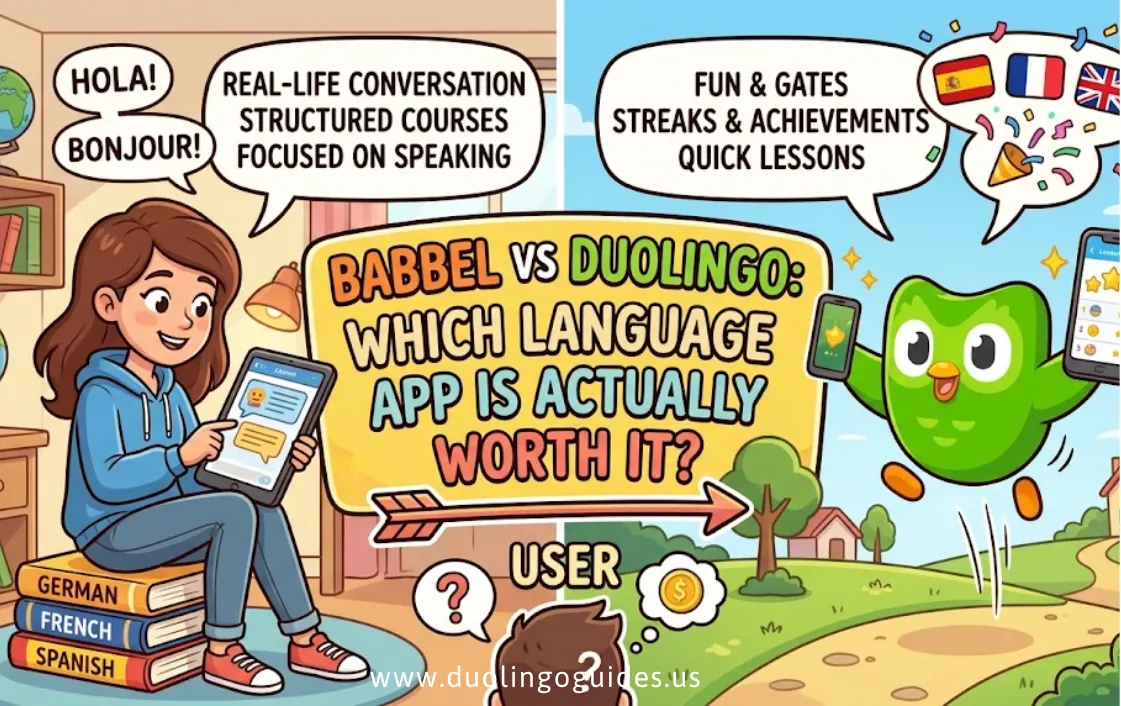
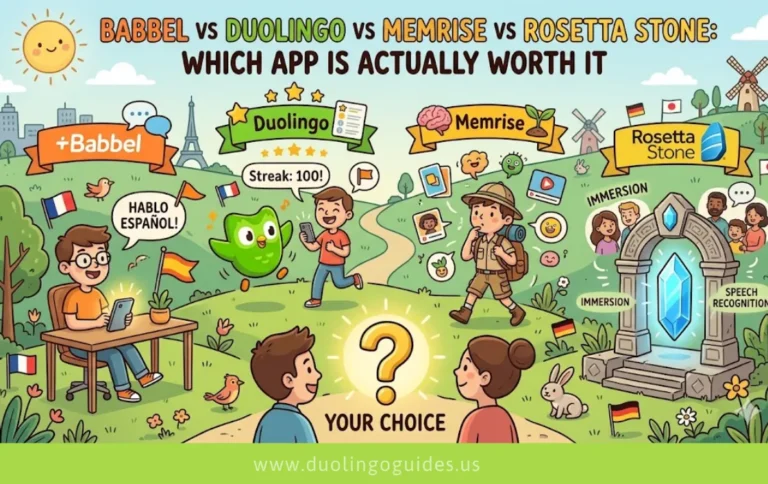
If you’re trying to decide between Babbel and Duolingo, you’re probably wondering one thing: is it worth paying for Babbel when Duolingo is free?
With over 116 million Duolingo monthly active users worldwide and a booming $122 billion language learning market, US learners need apps that fit hectic schedules and deliver real-world results.
Babbel shines for structured conversation skills, while Duolingo hooks with gamification—let’s break it down for Americans targeting fluency in 2026.
Babbel edges out for serious US learners seeking conversational fluency, but Duolingo wins for free, fun daily practice.
- Choose Babbel if you want structured lessons and faster speaking (10-15 min sessions, expert grammar).
- Choose Duolingo for budget-friendly streaks and 42 languages (5-10 min bites).
- Verdict: Babbel for professionals/travelers; Duolingo for beginners testing waters.
Key Differences
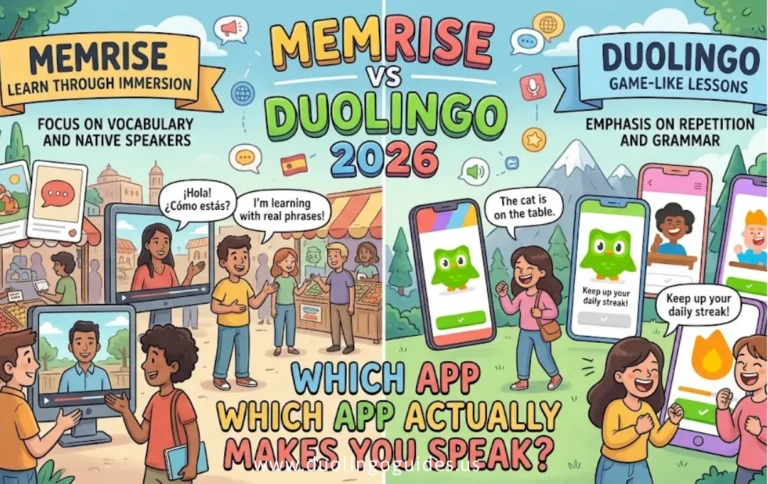
Babbel offers expert-crafted courses in 14 languages with natural sentences and speech recognition, ideal for US adults. Duolingo gamifies learning across 42 languages but skips deep grammar, leading to awkward phrasing complaints. Babbel twice the audio practice boosts listening; Duolingo’s AI “Practice Hub” targets errors but feels less substantive.
Pricing
Babbel costs $8.95-$14.99/month (12-month plan) or $299-$599 lifetime for all languages—great value vs. tutors. Duolingo free with ads; Super at $12.99/month or $84/year, Family $120/year. For US users, Babbel’s structure justifies the spend if fluency matters over streaks.
| Feature | Babbel | Duolingo |
| Monthly | $8.95-$14.99 | Free / $12.99 (Super) |
| Annual | $107.40 (equiv.) | $84 (Super) |
| Lifetime | $299-$599 | None |
| Languages | 14 | 42 |
| Best For | Depth | Breadth/Budget |
Also Check: How to Send Duolingo Scores to Universities
Speaking Faster
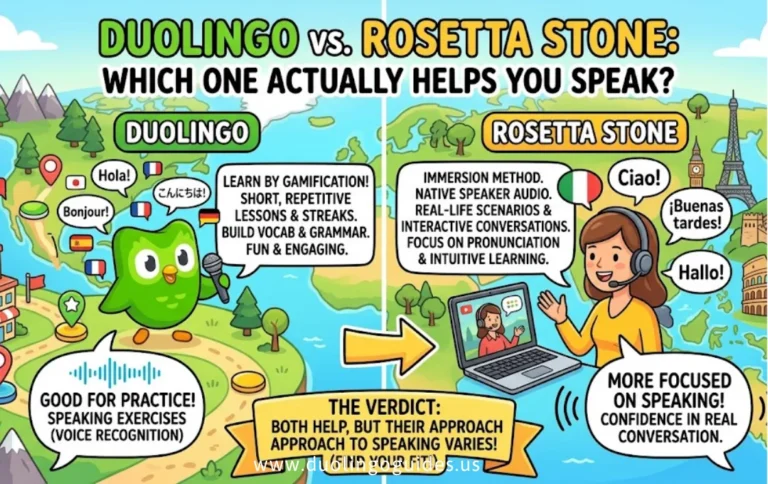
Babbel excels in real-life dialogues and accent training, helping US learners converse quicker. Duolingo improves via gamified drills but lags in natural speech per reviews. Users report Babbel builds fluency faster for practical talks, like ordering food abroad.
Busy Americans
Babbel’s 10-15 minute lessons with review reminders suit professionals squeezing sessions into commutes. Duolingo’s 5-10 minute bites fit rushed days, but 80% drop off early without structure. With 72% of learners using mobile apps, Babbel wins efficiency for time-strapped US workers.
Motivation
Duolingo streaks boost retention 3x, with 55% keeping 7+ day runs despite high quits. Babbel uses spaced repetition for steady progress, less addictive but more sustainable. Gamification pulls beginners; structure keeps ambitious Americans consistent.
Real-Life Use Cases
For travel, Babbel preps transactional phrases; travelers pair it with Duolingo vocab. Jobs: Babbel aids professionals in global roles via practical modules. Students: Duolingo free tier suits casual college prep amid 5.3M US ELLs.
Pros & Cons
Babbel pros: Structured, real convo focus; cons: Paid, fewer languages.
Duolingo pros: Free, addictive, broad options; cons: Shallow grammar, ads.
| App | Pros | Cons |
| Babbel | Expert lessons, speech tech, natural use | Subscription-only, 14 languages |
| Duolingo | Free core, streaks, 42 languages | Gamified fluff, weak grammar |
FAQs
Is Babbel better than Duolingo for beginners?
Duolingo eases beginners in with a free, gamified approach that feels simple and motivating, while Babbel suits beginners who prefer a more structured path, clearer explanations, and practical dialogue practice from the start.
Can you become fluent using Duolingo?
Duolingo alone rarely leads to full fluency. It builds vocabulary and basic grammar well, but you usually need speaking practice, listening exposure, and real conversations alongside it to reach confident, real-world language fluency.
Is Babbel actually better than Duolingo?
Babbel is often considered better for learners focused on speaking goals, especially in professional or everyday communication, while Duolingo works well for casual learners who want broader exposure and flexible, game-style language learning sessions.
Why do people stop using Duolingo?
Many people stop using Duolingo because motivation fades after streak excitement declines, lessons can feel repetitive, and some learners feel progress becomes shallow without deeper explanations or real speaking opportunities to maintain engagement.
Can you get fluent with Duolingo or Babbel?
Fluency with either Duolingo or Babbel is possible only when combined with immersion, conversation practice, and listening. Babbel may support independent learners slightly better, but both apps work best as tools within a broader learning routine.
Which is the No. 1 language learning app?
Duolingo ranks as the No. 1 language learning app by total users worldwide due to its free access and gamification, while Babbel is often rated higher in perceived lesson quality and structured learning effectiveness.
Is Babbel worth it in the US?
Babbel can be worth it for learners in the US who value efficient, structured lessons and practical conversation skills, especially professionals who prefer guided progress instead of relying only on free, gamified language learning tools.
Conclusion
Overall, Babbel is the stronger choice for learners who want structured lessons, practical conversations, and faster progress toward real-world fluency, making it worth the cost for professionals and frequent travelers.
Duolingo remains an excellent free option for beginners who want fun, flexible daily practice without financial commitment.
For best results, many learners benefit from starting with Duolingo and transitioning to Babbel while staying consistent with daily study habits and long-term motivation.

I’m a website professional with 5 years of experience in building, managing, and growing online content platforms. As the creator of DuolingoGuides.us, I focus on providing helpful, easy-to-understand guides and resources for Duolingo users and language learners. My goal is to make information simple, accurate, and accessible for everyone.