Babbel vs Duolingo vs Memrise vs Rosetta Stone: Which App Is Actually Worth It in 2026?
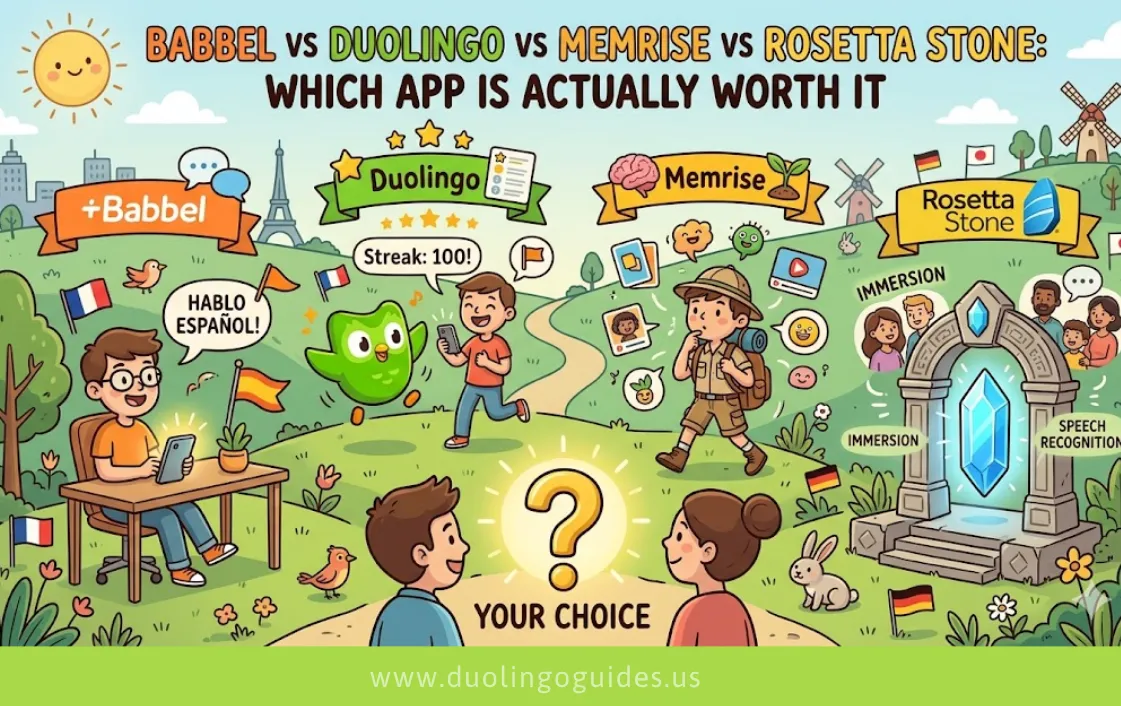
Confused by language app reviews that all seem biased? You are not alone, and the biggest time-waster is paying for the wrong app or staying stuck on a free one that does not match your goal. The truth is that each app is good at something different, so the best choice depends on whether you want motivation, speaking practice, structure, or the cheapest entry point.
Quick Answer
- Best for beginners: Duolingo, because it is free, easy to start, and built for short daily habits.
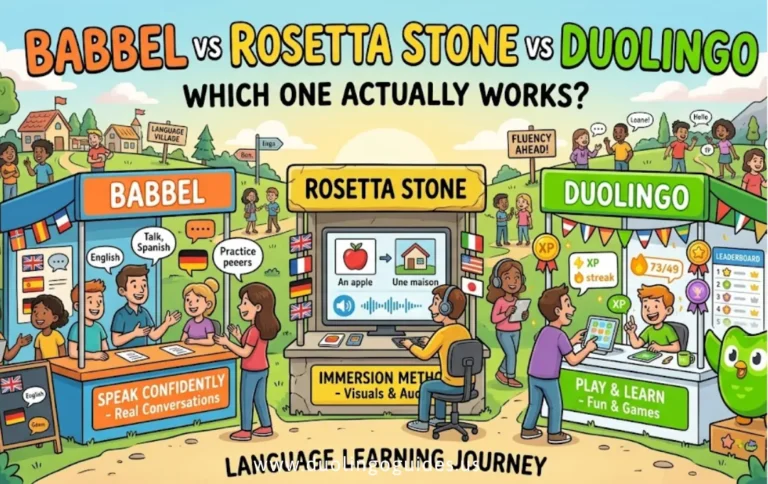
- Best for speaking: Rosetta Stone, because its immersion style and speech feedback are designed to build pronunciation confidence.
- Best free option: Duolingo, since its core version is free and ad-supported.
- Best serious learners: Babbel, because it uses a more structured, conversational curriculum with clearer practical progression.
How To Choose
If you are a beginner, Duolingo is usually the easiest first step because it is low-pressure, gamified, and cheap to test.
If you want fluency, Babbel or Rosetta Stone is a better bet than Duolingo because both push beyond casual vocabulary drills into more deliberate practice.
If you are busy, Duolingo fits best because its lessons are short and easy to keep up with daily.
If you quit easily, Duolingo can help you build consistency, but Babbel may keep you more accountable once you are ready for real progress.
Also Check: Is Super Duolingo Free
Deep Comparison
Learning style
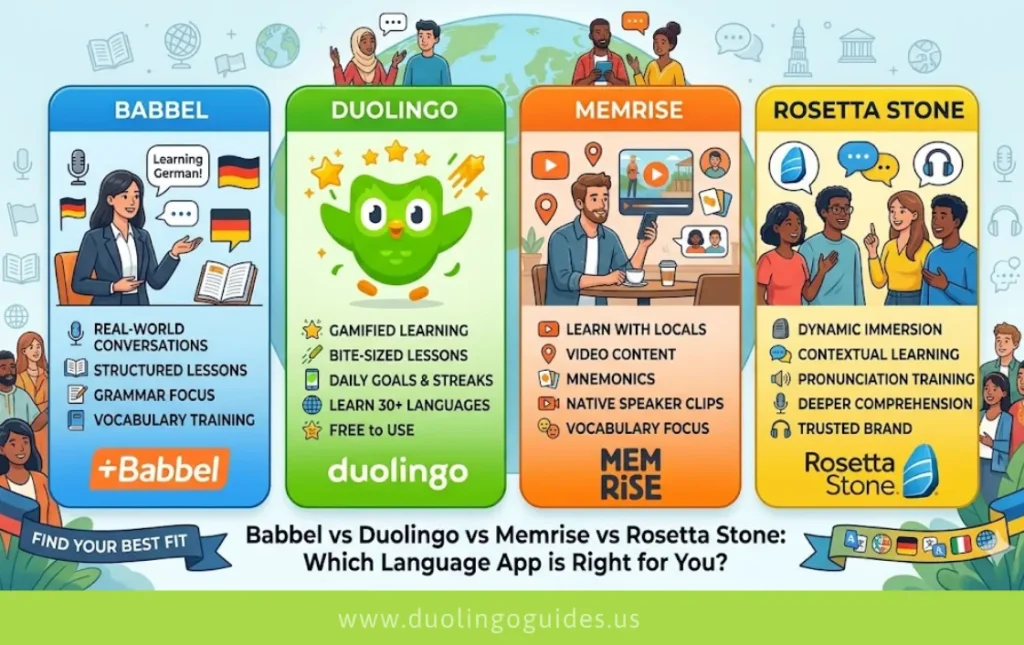
Duolingo uses gamification and spaced repetition, which makes it fun and good for habit-building, but less effective for deeper understanding.
Babbel takes a more structured, conversational approach with lessons designed by linguists and a clearer curriculum.
Memrise is generally positioned as a vocabulary-heavy, lighter-duty app, which makes it useful for word recall but less complete than Babbel or Rosetta Stone for full language growth.
Rosetta Stone leans into immersion and context instead of translation, which can feel slower at first but more natural for some learners.
Speaking ability
Rosetta Stone has the strongest reputation for pronunciation practice because its method emphasizes immersion and speech recognition.
Babbel is the most balanced option for speaking because it combines practical dialogues with pronunciation feedback.
Duolingo is weaker for real speaking because it is better at recognition, repetition, and routine than spontaneous conversation.
Memrise is helpful for exposure and recall, but it is not the strongest choice if speaking is your main goal.
Pricing and value
Duolingo is the cheapest to start because the basic app is free, while Super Duolingo in 2026 is commonly listed around the low double digits per month or lower on annual plans.
Babbel’s U.S. pricing is typically around the mid-to-high teens per month at retail, with annual plans lowering the effective monthly cost.
Rosetta Stone generally sits around the premium middle of the market, and its lifetime option can make sense if you plan to use it long term.
Memrise often lands in the cheaper premium range, so it can be attractive if you mostly want vocabulary practice without paying Babbel-level pricing.
Real-life usability
Babbel is the strongest pick for practical situations like travel, interviews, and everyday conversation because it focuses on usable dialogue.
Rosetta Stone works well if you want to build confidence saying words out loud, especially in languages where pronunciation matters early.
Duolingo is best for keeping a streak and getting comfortable with basic phrases, but it can stall once you need real-world conversation.
Memrise is fine as a lightweight companion app, but it is less convincing as a stand-alone solution for serious learners.
Where Each Fails
Duolingo fails when learners mistake streaks for fluency, because the app is strong for momentum but weaker for advanced depth.
Babbel fails for people who want free access, because there is no true free version and the model is more commitment-heavy.
Rosetta Stone fails for impatient learners, because the immersion-first style can feel confusing before it starts making sense.
Memrise fails when someone needs a full system rather than a supplement, since vocabulary learning alone does not equal language competence.
Real-Life Scenarios
For travel, Babbel is usually the smartest pick because it teaches practical phrases and conversation patterns you are more likely to use immediately.
For a job, Babbel again has the edge because its structure feels more serious and workplace-friendly.
For casual learning, Duolingo is the easiest and most enjoyable entry point because it lowers friction and keeps you engaged.
For pronunciation-heavy goals, Rosetta Stone is the strongest single-app option.
Final Verdict
If you want a free, fun habit, choose Duolingo.
If you want the most practical all-around learning experience, choose Babbel.
If you care most about pronunciation and immersion, choose Rosetta Stone.
If you want lightweight vocabulary support, choose Memrise.
FAQs
Is Duolingo enough for fluency?
No, Duolingo is usually not enough by itself for true fluency because it is strongest at beginner habit-building and vocabulary repetition.
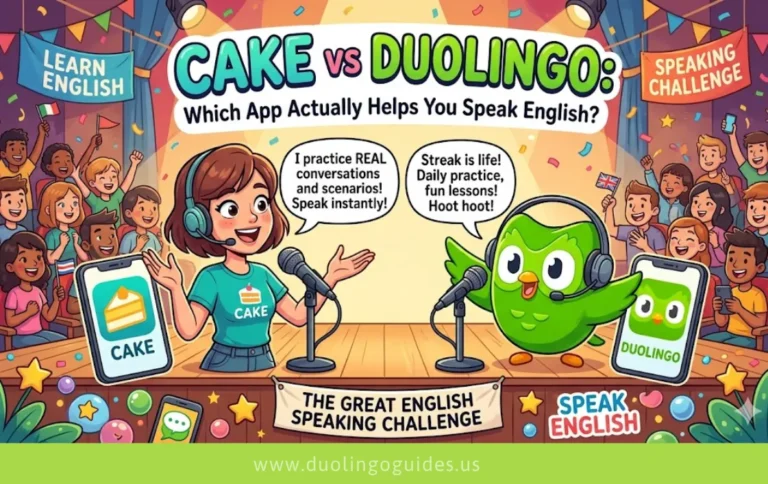
Which app is best for speaking English?
Babbel and Rosetta Stone are stronger choices than Duolingo if your main goal is speaking practice, with Rosetta Stone especially focused on pronunciation.
Is Rosetta Stone a good language learning app?
Yes, Rosetta Stone is a good app if you want immersion-based learning and pronunciation support, but it is not the easiest app for casual learners.
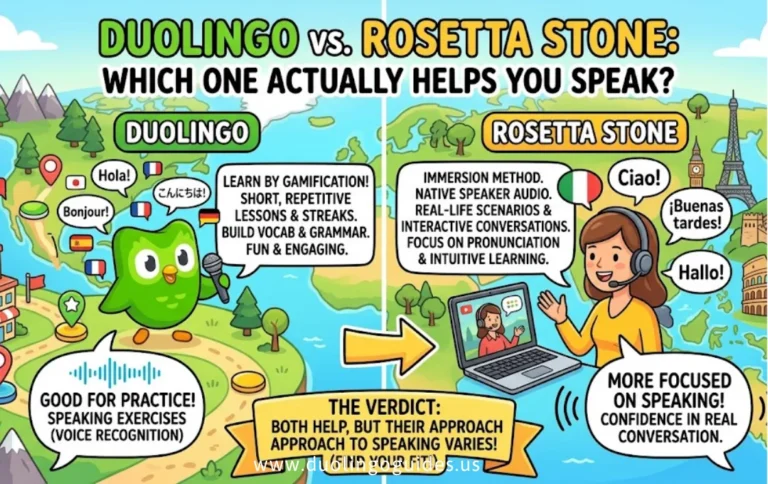
Is Rosetta Stone better than Duolingo?
For speaking and immersion, yes; for free access and casual motivation, no.
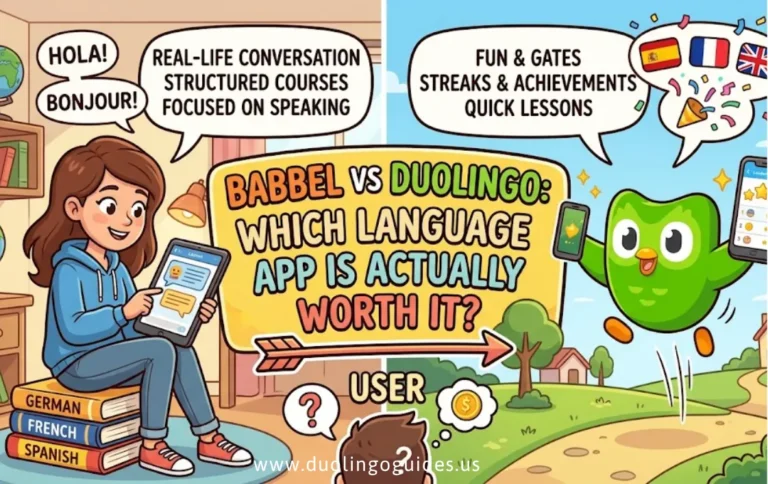
Which is better Babbel or Duolingo?
Babbel is better for structured learning and real-world conversation, while Duolingo is better for free, low-pressure practice.
Should you use Babbel or Rosetta Stone?
Use Babbel if you want clearer explanations and practical dialogue; use Rosetta Stone if you want immersion and pronunciation training.
Is Rosetta Stone worth it?
It is worth it for disciplined learners who want speaking confidence and long-term value, especially if they will use it consistently.
Conclusion
For most U.S. learners in 2026, Babbel is the best paid choice, Duolingo is the best free starting point, Rosetta Stone is the best for speaking confidence, and Memrise is the weakest full-course option but useful as a support tool.
The smartest move is to choose the app that matches your goal instead of the one with the loudest marketing.

I’m a website professional with 5 years of experience in building, managing, and growing online content platforms. As the creator of DuolingoGuides.us, I focus on providing helpful, easy-to-understand guides and resources for Duolingo users and language learners. My goal is to make information simple, accurate, and accessible for everyone.