Duolingo Streak Freeze Explained: How to Save Your Streak When You Miss a Day
Why Your Streak Feels So Precious
If you’ve ever stared at that streak counter in Duolingo and felt a knot in your stomach after missing a day, you’re not alone. Millions of users in the USA—and around the world—treat their streak like a daily contract with themselves to keep learning.
For many, the Duolingo streak has become a mix of motivation, identity, and even a bit of social pride. When you miss a lesson, you’re not just failing a random app reminder; you’re risking months or even years of visible progress.
This guide will show you exactly how the Duolingo Streak Freeze works, why it sometimes feels like it “didn’t protect” you, and practical ways to keep your streak alive—even when you truly can’t log in.
Section 1: What Is Duolingo Streak Freeze?
Simple definition
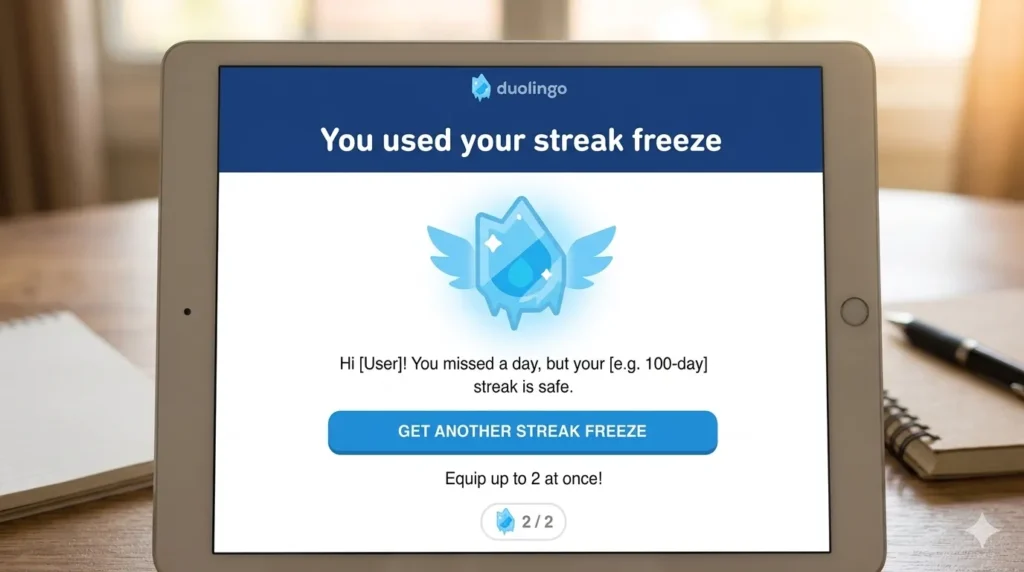
A Streak Freeze is a protective item in Duolingo that prevents your overall streak from resetting to zero if you fail to complete a lesson on a given day. Think of it as an insurance policy for your streak: the day you miss still counts, and your streak continues as if you had logged in.
Where it appears in the app
On modern Duolingo (iOS, Android, and web), Streak Freezes are stored in the Shop section and can be previewed or activated from your profile or streak calendar. New users typically see a pop-up or a small ice-cube icon when they first join or miss a lesson, indicating that a Streak Freeze is equipped.
How it activates
A Streak Freeze activates automatically when you meet three conditions:
- You have at least one Streak Freeze available.
- Your overall streak is active and you fail to complete a lesson by midnight (per your device’s time zone).
- The Streak Freeze was purchased or earned before the day you miss.
If all conditions are met, Duolingo applies the freeze and your streak does not reset for that day.
Section 2: How Streak Freeze Actually Works (Step By Step)
When it activates automatically
Once you’ve added a Streak Freeze to your account, Duolingo manages it in the background. If you forget to open the app until the next morning, the system will:
- Check whether you completed any lesson by midnight local time.
- If you did not, it consumes one Streak Freeze and keeps your streak alive.
This means you don’t need to “tap” or “use” the freeze manually; it acts like a silent safety net on your streak.
How many freezes you can store
Most new English-language users in the USA start with two free Streak Freezes when they first join Duolingo. Over time, you can add more by:
- Earning Streak Society rewards (reaching 100-day streaks, which grants three extra Streak Freezes).
- Purchasing additional freezes from the Duolingo Shop using gems or other in-app currency.
Regular users can typically store up to five Streak Freezes at once, but this depends on promotions and account history.
What counts as a “missed day”
A missed day is defined as any 24-hour period where you do not complete at least one lesson before midnight in your device’s time zone. Short practice sessions, skill checks, and even a single question on the app all count toward your streak, as long as they are recorded before the cutoff.
If you miss more than one day in a row, each additional missed day will consume another Streak Freeze, provided you have them available.
Section 3: Common Problems Users Face
Streak reset even with freeze
Many users in the USA report that their streak still resets despite having a Streak Freeze. This usually happens because:
- The Streak Freeze was not active on the day they missed (bought too late, or already used up).
- The app did not sync properly before midnight, so the system treated the day as “incomplete.”
Duolingo’s support documentation notes that Streak Freezes are proactive, not retroactive—you must own them before the day you miss.
Freeze not activating
Sometimes the Streak Freeze simply doesn’t trigger, even when you expect it to. Common reasons include:
- The freeze is out of date or tied to a specific promotion that expired.
- Account or device issues (offline mode, old app version, or server-side glitches).
If you see this happen repeatedly, upgrading the app, logging out and back in, or letting Duolingo support review your account can often fix it.
Confusion about time zones
Because Duolingo uses the device’s local time, travelers or people who change time zones can accidentally miss the deadline without realizing it. For example, if you’re in the Central Time Zone (USA) and your phone switches to Pacific Time, your personal “midnight” shifts, and you might think you still have hours when in fact your streak-day has already ended.
Multiple missed days issue
If you forget to use Duolingo for three days straight, each day will burn one Streak Freeze, assuming you have three or more. However, if you only had two freezes, the third day will still reset your streak, even if you attach a new freeze later.
⚠️ Section 4: Why Your Streak Might Still Break
App sync delay
Sometimes the app thinks you missed a day because of a sync delay between your device and Duolingo’s servers. If you started a lesson late at night but the app didn’t fully record it before midnight, your streak may still reset despite your effort.
To reduce this risk, try to:
- Finish at least one short lesson well before midnight.
- Ensure your device has stable internet so the lesson uploads immediately.
No freeze available
If you’ve already used all of your Streak Freezes and haven’t bought or earned more, there’s nothing to protect your streak the next time you miss a day. For frequent travelers or busy professionals in the USA, this can be frustrating—especially if they expect a “lifetime” safety net.
Logging in vs completing a lesson
Simply opening Duolingo is not enough to extend your streak. You must complete at least one lesson for that day; watching ads, browsing the shop, or checking your profile won’t count.
Many users confuse activity with streak completion, then feel shocked when their streak drops despite “being on the app.”
Section 5: Is Streak Freeze Really Worth It?
Pros vs cons
| Aspect | Pros | Cons |
| Motivation | Keeps streak alive during busy days, preserving months of progress. | Can create over-reliance on the freeze instead of real habits. |
| Cost | First two freezes are usually free; extra ones can be bought. | Regular users may spend gems or money to stock up on freezes. |
| Learning impact | Helps maintain consistency, which boosts long-term retention. | Risk of “streak farming” instead of focused, meaningful practice. |
In the USA, where many learners juggle school, work, and family, the Streak Freeze can genuinely reduce the stress of “missing a day,” as long as it’s used as a backup, not the main strategy.
Emotional dependency risk
Some users become emotionally attached to their streak number, treating it almost like a reputation metric rather than a learning tool. When a long streak breaks, they may quit Duolingo entirely, even though slow, steady practice is far more important than a single number.
A healthy approach is to view the Streak Freeze as a gamification feature, not a guarantee of fluency.
Habit vs gamification discussion
Gamification—badges, streaks, and freezes—helps beginners in the USA stick with language learning for weeks or months longer than they normally would. However, experts and advanced learners often shift toward structured goals (grammar mastery, conversation practice, or exam prep) instead of chasing streaks.
Using the Streak Freeze to smooth out occasional lapses while building a real routine is the ideal balance.
Section 6: Better Ways to Protect Your Learning Habit
Reminders
In the USA, most users rely on phone alarms or calendar reminders to complete their Duolingo lesson before midnight. Setting a recurring notification for 8–9 p.m. (before the clock actually hits 12 a.m.) drastically reduces the chance of missing a day.
Many learners also tie their lesson to an existing habit—like after dinner, before bed, or right after a commute—to make it feel natural instead of forced.
Backup routines
Instead of depending only on Duolingo, you can create a backup routine that still counts as learning:
- Chatting with a language-exchange partner via video or text.
- Listening to a podcast or YouTube video in your target language.
These activities won’t save your Duolingo streak directly, but they protect your real-world progress even if your app streak breaks.
Flexible learning strategy
For busy professionals and students in the USA, a flexible strategy works best:
- Aim for one short Duolingo session on most days, but accept that occasional breaks are normal.
- Use Streak Freezes sparingly, as “emergency” tools for travel, illness, or emergencies.
- Focus on weekly progress (skills unlocked, XP gained, lessons completed) rather than only the streak number.
This mindset reduces the fear of losing your streak and makes learning feel more sustainable.
Section 7: FAQs (SEO GOLD SECTION)
Does Streak Freeze work automatically?
Yes. If you have at least one Streak Freeze equipped and you miss a day, Duolingo will automatically apply it to preserve your streak, as long as the freeze was active before the day you missed.
Can you use it multiple times?
Yes. Each Streak Freeze protects one missed day, so if you have three freezes, you can miss three separate days (or three consecutive days) and keep your streak alive.
How long will Duolingo keep my streak freeze for?
Streak Freezes themselves do not expire on a calendar date, but if you use them, they are gone until you buy or earn more. Promotional freezes tied to special events may have their own expiration rules, which Duolingo explains in the app.
Is a 2000-day Duolingo streak good?
A 2000-day streak is extremely impressive and shows extraordinary consistency. However, such a long streak doesn’t automatically mean advanced fluency; it mainly reflects habit strength and discipline.
Can I freeze my streak on Duolingo?
Yes. You can equip a Streak Freeze from the Shop or through in-app rewards, and it will stay active until you miss a day or until you manually remove it (if your app version allows that).
What happens if you miss a lesson on Duolingo?
If you miss a lesson and have no Streak Freeze, your overall streak resets to zero, though you can start building it again immediately. Individual language streaks may still drop even if your overall streak is frozen.
Why should you keep up with Duolingo?
Regular practice on Duolingo helps with vocabulary retention, grammar recognition, and basic speaking skills. For English speakers in the USA, daily use can make it easier to pick up phrases for travel, work, or communication with multilingual friends.
How long does a Duolingo streak last?
Your streak lasts as long as you complete at least one lesson per day before midnight in your time zone. If you miss a day without a Streak Freeze, it resets; otherwise, it can theoretically continue for years.
Can you get a 1000-day streak on Duolingo?
Yes. Many users in the USA and worldwide have achieved 1000-day streaks or longer by using Streak Freezes, reminders, and strict routines. Such milestones often unlock special badges or membership perks, like Streak Society recognition.
Why is everybody canceling Duolingo?
Some users cancel or reduce Duolingo use because of subscription fatigue, aggressive notifications, or frustration with streak mechanics. Others move on to more immersive resources (tutors, conversation apps, or classrooms) once they feel the app alone is not enough.
Why did I lose my streak even with freeze?
You likely lost your streak because:
- The Streak Freeze had already been used on a previous day.
- You bought the freeze after missing the lesson, so it couldn’t apply retroactively.
- The app failed to sync your lesson before midnight, and the system treated it as incomplete.
Conclusion
Duolingo Streak Freeze is a powerful tool for learners in the USA who want to protect their hard-earned streaks without stopping their daily routine. It works automatically, preserves your progress when life gets busy, and can be a real psychological boost when you have a hectic schedule.
However, the best strategy is to treat the Streak Freeze as a backup, not a crutch. Combine it with reminders, flexible learning habits, and real-world practice to keep your language skills growing—even if your streak ever breaks.

I’m a website professional with 5 years of experience in building, managing, and growing online content platforms. As the creator of DuolingoGuides.us, I focus on providing helpful, easy-to-understand guides and resources for Duolingo users and language learners. My goal is to make information simple, accurate, and accessible for everyone.