Duolingo French: A Complete Guide to Learning Effectively (2026)
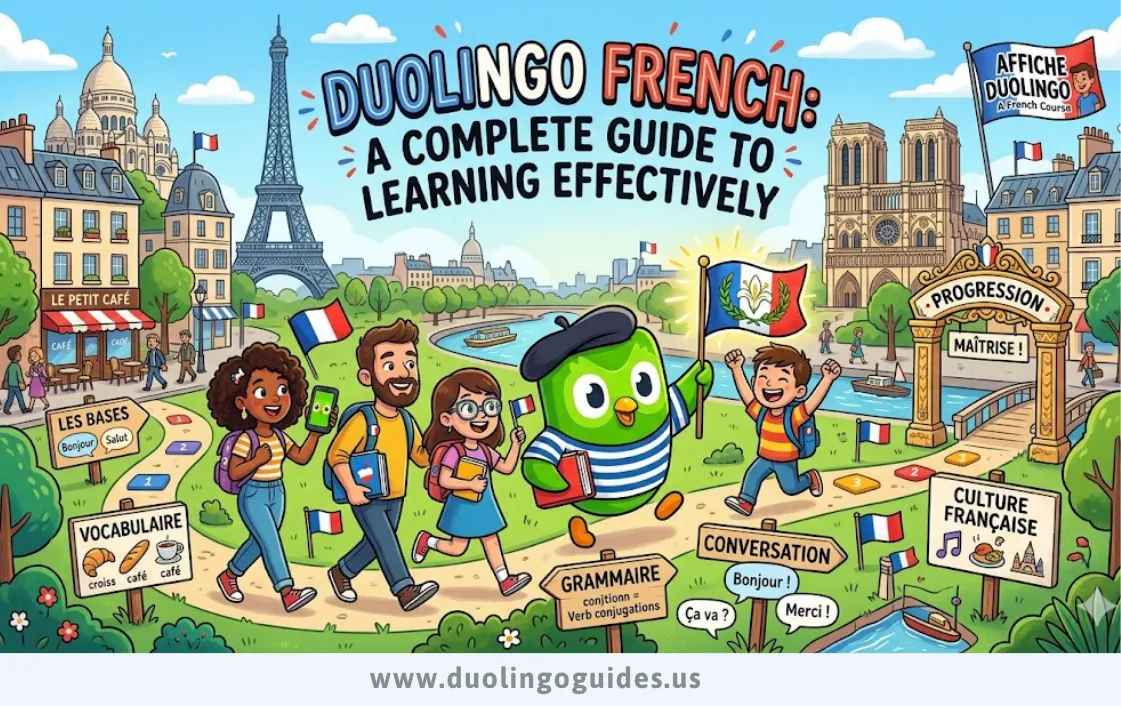
Struggling to turn Duolingo’s gamified lessons into real French fluency? You’re not alone—millions of Americans hit plateaus with vocabulary drills that ignore speaking and culture.
This guide delivers a proven roadmap to overcome these hurdles and speak French confidently.
Is Duolingo Enough?
Duolingo builds solid A1-A2 basics like vocabulary and simple phrases through fun, varied exercises, making it ideal for beginners in the USA. However, it falls short for fluency, lacking deep grammar explanations, precise pronunciation feedback, and real conversations—users often stall at B1 without supplements.
Pros include interactive listening/reading tasks and daily streaks for motivation. Cons? Repetitive content past basics and no cultural immersion, so pair it with tutors for USA learners targeting travel or business.
Biggest Problems and Solutions
Duolingo users face repetitive exercises that bore intermediates, leading to stalled progress around the A2 level. Solution: Limit sessions to 15-20 minutes daily, then switch to Stories or podcasts for variety.
Poor pronunciation feedback confuses nasal sounds like “on” or “an,” frustrating American accents. Solution: Record yourself via Forvo or YouTube natives, then compare—aim for 10 reps per tricky word.
Grammar gaps leave rules unexplained, like subjunctive triggers. Solution: Use free Lawless French worksheets post-lesson to drill patterns explicitly.
Irrelevant phrases like “I am a cat” ignore practical talk. Solution: Customize with Anki flashcards of high-frequency USA-relevant vocab, like ordering at French bistros in NYC.
No speaking practice means silence in real scenarios. Solution: Join italki for 1:1 sessions with French tutors from France, focusing on Duolingo gaps weekly.
Also Check: Is Duolingo Good for Kids? Honest Parent Review
Best Way to Use Duolingo
Follow this daily routine: Start with 10-minute skill reviews, then tackle 2 new lessons focusing on weak areas like verbs. End with Duolingo Stories for context—track streaks via the app’s calendar.
Weekly plan: Monday-Wednesday: Core lessons (20 min). Thursday: Practice Hub for speaking. Friday-Sunday: Podcasts + 1 review unit. Log progress in a journal for USA users, balancing work.
Roadmap—Beginners (Months 1-3): Basics to A1 (100 units). Intermediate (4-9): A2-B1 via stories (272 total units, ~9 months at 1/day). Advanced: Supplement heavily.
Improve Speaking, Listening, and Memory
Boost speaking with shadowing: Replay Duolingo audio, mimic exactly 5x daily—fixes rhythm for Americans. Use HelloTalk for language exchange with Parisians.
Listening: Transcribe Coffee Break French podcasts (free on Spotify), then check against scripts—builds ear for speed.
Memory: Apply spaced repetition via Anki decks exported from Duolingo—review 50 cards/day. Pair with mnemonics, like linking “chat” (cat) to pets.
Duolingo vs Others
Real-Life French vs Duolingo
Duolingo french teaches “Je suis un chat” (cute but useless), while real Paris chats demand “Voulez-vous du café?” with polite “s’il vous plaît.” Cultural context? App skips tu/vous formality crucial in French business.
Examples: App’s rigid translations reject synonyms; natives say “Qu’est-ce que tu suggères?” flexibly. USA travelers need market lingo like “Combien ça coûte?” for markets—not covered deeply.
FAQs about duolingo french
Is Duolingo enough?
No—Duolingo builds strong basics in vocabulary and grammar, but it lacks real conversation depth. To reach fluency, you should combine it with speaking practice, tutors, and real-life listening exposure consistently.
How long to learn French?
With daily practice, you can reach A2 level in about 6–12 months. Achieving B2 fluency usually takes 2+ years, especially if you include immersion, speaking practice, and consistent real-world language exposure.
Why does no one like Duolingo anymore?
Some users feel recent updates made courses more repetitive and less challenging. Content depth has reduced in certain areas, though improvements and new features are expected in upcoming 2026 updates.
What is the 80/20 rule in French?
The 80/20 rule means focusing on the most common 20% of vocabulary and grammar, which helps you understand roughly 80% of everyday conversations, making learning faster and more efficient.
Can you fully learn French with Duolingo?
No—Duolingo can take you to around B1 level, but it doesn’t fully develop speaking or advanced comprehension. You’ll need additional tools like conversations, media, and writing practice to become fluent.
Is Duolingo the best app?
Duolingo is one of the best free apps for beginners due to its fun and engaging style. However, apps like Babbel often provide better structured lessons and more practical conversation-focused learning experiences.
Best way to practice speaking?
The most effective way is combining italki tutors with daily shadowing of Duolingo audio. This builds pronunciation, confidence, and real conversation skills while reinforcing vocabulary and listening comprehension consistently.
Conclusion about duolingo learn french
Duolingo is a powerful starting point for learning French, but it works best when combined with smarter strategies and real-world practice. By limiting repetitive drills, adding speaking sessions, and using tools for grammar and pronunciation, learners can break past plateaus.
Stay consistent, follow a structured routine, and focus on practical language use. With the right balance, you can turn basic lessons into confident, real-life French communication within months.

I’m a website professional with 5 years of experience in building, managing, and growing online content platforms. As the creator of DuolingoGuides.us, I focus on providing helpful, easy-to-understand guides and resources for Duolingo users and language learners. My goal is to make information simple, accurate, and accessible for everyone.