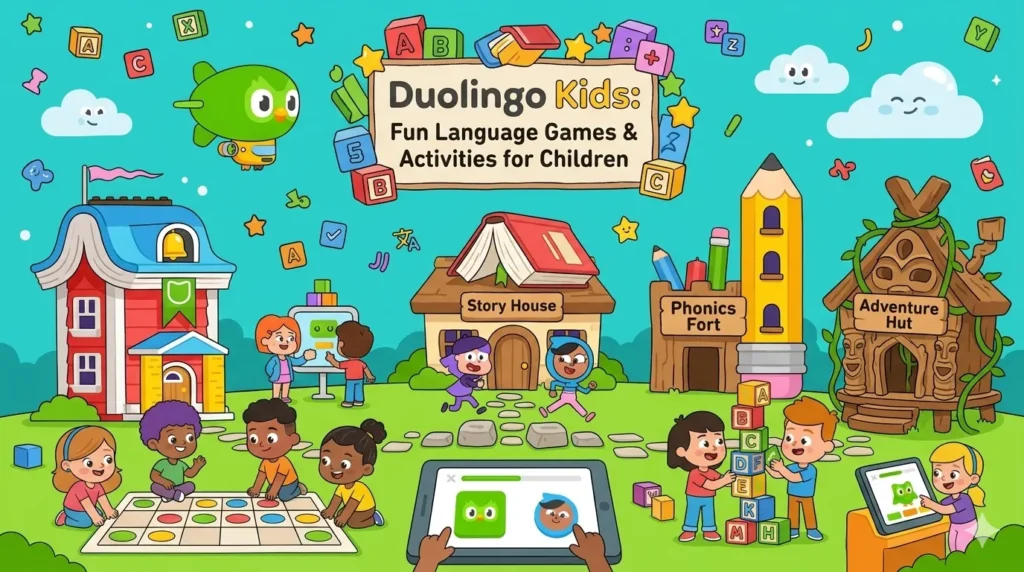
Duolingo Kids: Fun Language Games & Activities For Children
Most parents in the U.S. worry that language apps are just “fancy screen time” and won’t actually help their child speak, read, or understand another language.
The core question is: Is Duolingo Kids genuinely educational, or just another colorful game? The short answer: Yes, it can help kids build vocabulary and basic reading and listening skills, especially when used with clear limits and real-world practice.
This guide explains how Duolingo Kids works for American families, what age groups benefit most, and how to structure it so your child stays engaged but not addicted.
Is Duolingo Good for Kids?
Yes, Duolingo can be good for kids, especially once they can read simple sentences and follow basic instructions.
For U.S. families, the app is widely used by school-age children and even supports English-language learners with structured practice in reading and listening.
However, it’s best treated as a supplement, not a full-time curriculum—it works best when combined with real-world conversation, books, or speaking practice.
Why Kids Love Duolingo
Kids love Duolingo because it feels like a game: colorful icons, instant feedback, cute owl “Duo,” and rewards for completing lessons.
The app uses gamification—hearts, streaks, XP, and level-ups—to keep learners hooked on short, 5–10-minute sessions.
Yet many kids (and adults) quit quickly because:
- The repetition of similar tapping/swipe-style exercises becomes boring after a while.
- The pressure to keep streaks can turn practice into stress instead of fun.
- Without real-world use, they don’t feel “progress” beyond the app, so interest fades.
Biggest Problems Parents Face
Three main pain points bother parents using Duolingo in the U.S. context:
- Engagement vs boredom
- Younger kids enjoy the first few weeks, but then lose interest if no one helps them apply what they learn.
- Older kids may continue just to “keep the streak,” not because they actually enjoy learning.
- Screen time guilt
- Many parents feel conflicted: Duolingo is “educational,” but push notifications, streaks, and unlock-mechanics can pull kids back repeatedly.
- Children under 13 are especially sensitive to reward systems that promote overuse.
- Learning doubt
- Parents wonder: “Is my child actually getting better at the language, or just memorizing app patterns?”
- Research shows Duolingo improves reading and listening, but it’s weaker on speaking fluency and cultural depth.
How to Keep Kids Engaged
To keep U.S. kids engaged without burning out, parents can use these research-backed strategies:
- Build a routine, not a marathon
- Limit sessions to 5–15 minutes per day, especially for younger children.
- Tie Duolingo to another habit: e.g., “after homework, 10 minutes of Spanish.”
- Create a simple reward system
- Focus rewards on effort, not streaks: “Finish 3 lessons this week = choose a family movie in Spanish.”
- Avoid linking rewards directly to stars or XP to reduce app-addiction.
- Add parental involvement
- Ask your child to read sentences aloud or explain what they learned.
- Do a weekly “real-life” challenge: ordering food, naming objects, or watching a short cartoon in the target language.
Age-Wise Guide: Which Kids Benefit Most
Duolingo’s “kids-friendly” versions work best at different ages:
- Ages 3–5: Duolingo ABC
- Designed for early literacy, not full language courses.
- A study found children improved literacy scores by 28% after 9 weeks of use.
- Best for phonics, letter sounds, and basic reading in English-speaking homes.
- Ages 5–8: Duolingo Kids (ages ~6–12)
- Duolingo Kids is aimed at roughly 5+, with simplified lessons and child-safe accounts.
- Kids in this group benefit from simple vocabulary, pictures, and audio, but still need adult help with grammar and pronunciation.
- Ages 8–12: Main Duolingo app (with limits)
- U.S. parents can let kids use the main Duolingo app, but should disable social features and monitor streak pressure.
- At this age, Duolingo can support reading and listening skills, especially if the child already reads English comfortably.
Does Duolingo Actually Teach Languages?
Duolingo is not magic, but research shows it does teach real language skills—within limits.
- Learning outcomes
- Studies of Duolingo English courses found learners who finished A2-level content scored at Intermediate High in reading and listening on standardized tests.
- Another company-backed analysis claims 120 hours on Duolingo ≈ 4 semesters of university language instruction in overall progress.
- Strengths
- Strong on vocabulary, basic sentence patterns, reading, and listening through short, repetitive drills.
- Good for exposure: kids get used to hearing and reading another language regularly.
- Weaknesses
- Speaking fluency is limited; kids rarely get long-form conversation practice.
- Grammar explanations are minimal, so children may struggle with “why” a sentence is correct.
- The gamified interface can sometimes prioritize streak-keeping over deep learning.
Free vs Paid: What Should Parents Choose?
For U.S. families, the free vs paid choice depends on how intensively your child will use Duolingo.
| Feature / Plan | Free Duolingo (Kids) | Super Duolingo (Paid) |
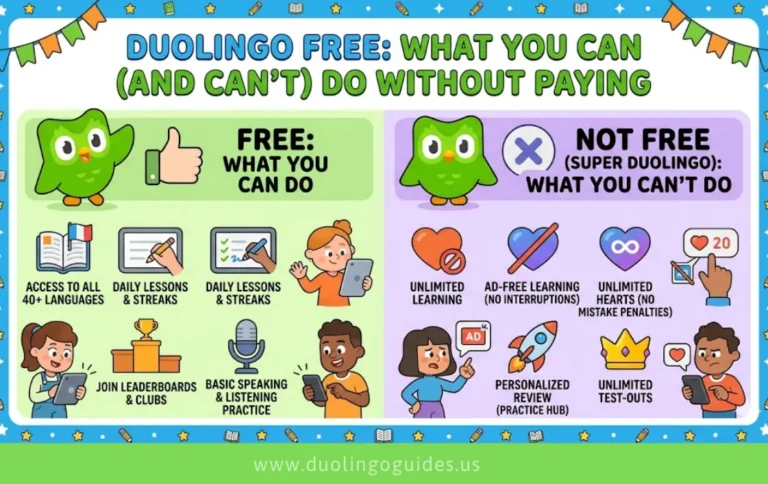
| Course content | Full skill trees, many languages. | Same core content, plus extra tips and practice. |
| Ads | Shown between lessons. | Removed on paid plans. |
| Hearts / limits | Lives system; mistakes stop you. | Unlimited hearts; no interruptions. |
| Notifications / nags | Frequent reminders and streak push. | Less pressure, cleaner interface. |
| Best for | Casual, limited-time practice. | Daily, serious users and families. |
For most American parents, free Duolingo is enough if:
- Kids use it 10–15 minutes per day.
- Parents control notifications and screen-time settings.
Upgrade to Super Duolingo if:
- Your child wants to practice daily without interruptions.
- You have multiple kids using the family plan (often better value).
How to Use Duolingo Effectively for Kids (Step-by-Step Plan)
Here’s a simple, U.S.-friendly system you can start this week:
Daily system (5–15 minutes)
- Warm-up (2–3 minutes):
- Do 1 review lesson from yesterday’s course.
- New lesson (5–10 minutes):
- Pick 1 new skill; let the child finish until hearts are low, then stop.
- Real-world tie-in (1–2 minutes):
- Ask: “What’s one word you learned today?” and use it in a sentence together.
Weekly structure
- Monday–Friday: 1–2 short sessions/day.
- Weekend:
- One family activity in the target language (song, show, or simple game).
- No “streak” pressure—focus on fun, not numbers.
For homeschool or bilingual families, this structure turns Duolingo into a support tool, not the main teacher.
Common Mistakes Parents Make
Many U.S. parents unintentionally reduce Duolingo’s effectiveness with these habits:
- Overuse and no breaks
- Letting kids binge-play until they’re tired or frustrated usually leads to fast burnout.
- No supervision
- Leaving kids alone on the app means they may skip hard lessons or never ask questions about grammar.
- No real-world practice
- If the child only learns inside the app, they rarely get speaking, listening in real contexts, or cultural exposure.
To avoid these, parents should set time limits, watch a few lessons with the child, and consistently connect app learning to real conversations.
Best Alternatives for Kids Language Learning
If Duolingo feels too gamified or limited, here are U.S.-friendly alternatives that still focus on real language learning:
- Duolingo ABC (for ages 3–8)
- Strong for phonics and early reading in English-speaking homes.
- Rosetta Stone Kids
- Image-based, immersive, good for ages 6+ who like game-like lessons.
- Dinolingo & Gus on the Go
- Designed specifically for younger kids (approx. 4–8) with simple stories and songs.
- Class-based or online tutors
- For kids ready to speak, weekly conversation practice with a tutor or language partner fills the gap Duolingo leaves.
Using one of these alongside Duolingo can balance gamification with deeper learning.
Final Verdict
For children in the U.S., Duolingo Kids and the main Duolingo app can be genuinely helpful tools for building vocabulary, reading, and basic listening skills in another language.
However, it works best when parents:
- set clear limits on screen time and streak pressure,
- use it as a supplement, not the only learning method,
- and connect app lessons to real-world conversations and activities.
If you combine Duolingo with a consistent, low-pressure routine and a few practical language activities, your child is more likely to enjoy the process—and actually retain what they learn.
FAQs
Q: Is Duolingo safe for kids in the U.S.?
A: Yes, Duolingo offers child accounts for under-13 users and keeps social features restricted for younger learners, though parents should still monitor screen time and notifications.
Q: At what age can my child start Duolingo?
A: Duolingo ABC is suitable for ages 3–8; Duolingo Kids is best for about age 5 and up, with the main app more appropriate for older kids who can read fluently.
Q: Does Duolingo really teach kids a language?
A: Research shows it improves reading and listening, especially up to A2/intermediate levels, but kids still need real speaking practice and cultural input to become fluent.
Conclusion
Duolingo Kids turns language learning into short, playful sessions that can genuinely help children build vocabulary and basic skills—especially when parents guide usage and add real-world practice. While it isn’t a standalone language school, it is a powerful, flexible tool for U.S. families who want to expose their kids to new languages in a fun, low-stress way.

I’m a website professional with 5 years of experience in building, managing, and growing online content platforms. As the creator of DuolingoGuides.us, I focus on providing helpful, easy-to-understand guides and resources for Duolingo users and language learners. My goal is to make information simple, accurate, and accessible for everyone.