Babbel vs Rosetta Stone vs Duolingo: Which One Actually Works?
If you’re a US‑based English speaker trying to learn a new language in 2026, the big question isn’t just “which app is best?” but which one actually moves you toward real‑world speaking—not just streaks and points.
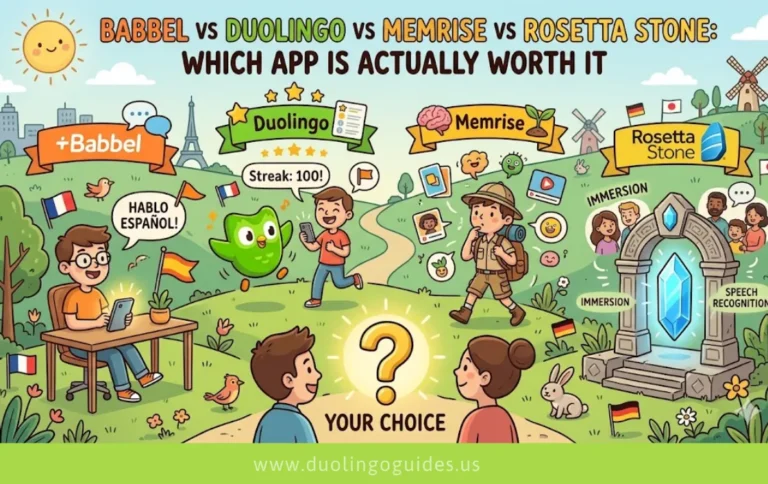
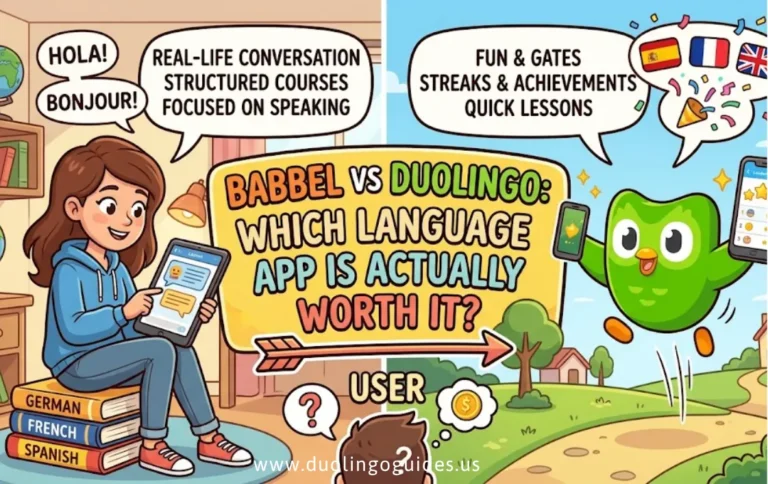
Babbel, Rosetta Stone, and Duolingo all have strong followings, but they target different learning styles, budgets, and goals. This guide breaks down each app in detail, with a focus on price, effectiveness, and real 30‑day outcomes for learners in the United States.
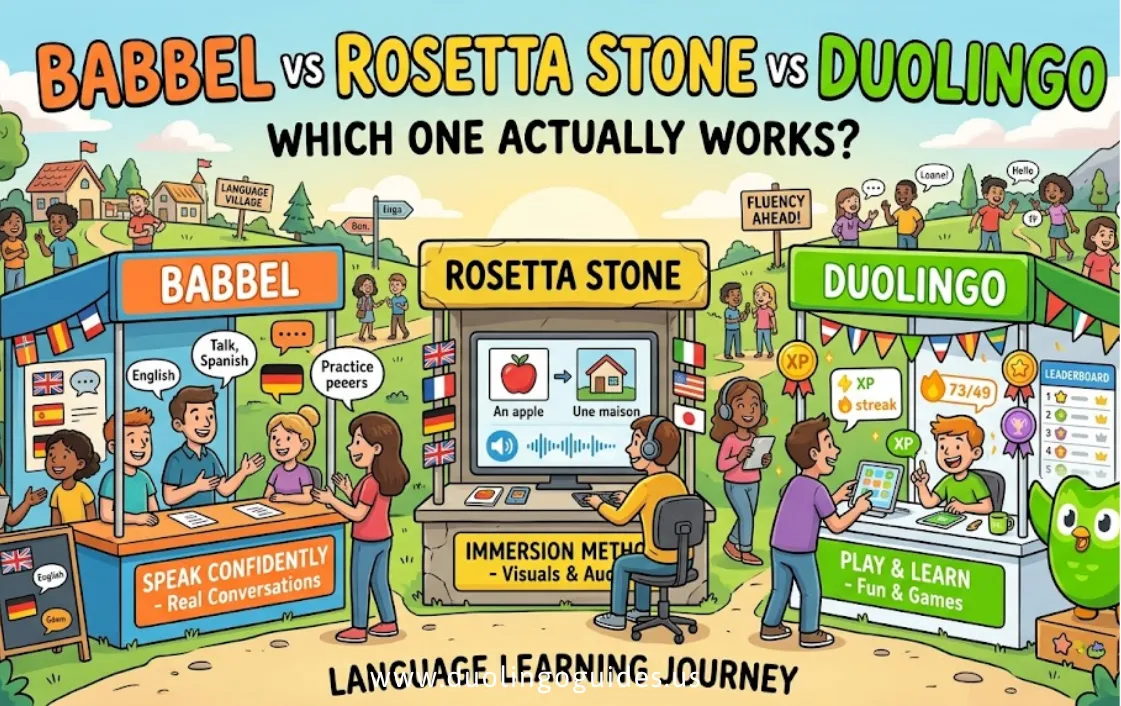
Who should use which app
Putting this in student‑vs‑professional‑vs‑traveler terms makes the choice clearer for Americans in 2026:
- If you’re busy with work or college → Duolingo
- Short 5–10 minute lessons fit into gaps on your commute or between emails.
- The free version is enough to build basic vocabulary and keep a streak alive, which is great for habit‑formation.
- If you want to speak fast in 3–6 months → Babbel
- Courses are built around real conversations (ordering food, asking directions, small talk), not just isolated words.
- You get grammar explanations in English, which helps if you’re starting from zero and want to understand why something is said a certain way.
- If you want deep, immersive learning → Rosetta Stone
- The method trains you to think in the target language using images and context, like a “language bootcamp.”
- This is powerful if you plan to live abroad, travel long‑term, or need strong listening skills, but it can feel overwhelming for total beginners.
Also Check: Duolingo Not Connecting
️ Detailed Comparison
Teaching style
- Duolingo
- Uses gamification: hearts, streaks, levels, and XP to keep you coming back.
- Lessons feel like mini‑games; you translate words, reorder sentences, and match audio to text.
- Best for spaced‑repetition vocabulary but weaker for deeper grammar structure.
- Babbel
- Follows a structured curriculum with clear progression from beginner to intermediate.
- Each lesson focuses on one topic (e.g., “at the restaurant,” “family,” “work”) and builds up sentences step by step.
- Great if you want academic‑style learning with explanations tailored to English speakers.
- Rosetta Stone
- Uses total immersion: no English explanations, only images paired with words and audio.
- You learn by pattern recognition (e.g., pictures of people, objects, and actions).
- Very effective for listening and speaking intuition, but it can feel confusing if you don’t like ambiguity.
Speaking ability
- Duolingo
- Includes speaking exercises, but many users report that Duolingo alone doesn’t build confident conversation skills with native speakers.
- Better for pronunciation drills and vocabulary recall than for spontaneous dialogue.
- Babbel
- Focuses on practical, everyday phrases you can reuse in real life.
- Many US learners say Babbel helps them hold basic conversations sooner than Duolingo, especially if combined with a tutor or language exchange.
- Rosetta Stone
- Emphasizes pronunciation and speaking from day one, with strong voice‑recognition feedback.
- Users often feel more comfortable mimicking native‑like speech patterns, though they may struggle to explain grammar in English.
Grammar clarity
- Duolingo
- Teaches grammar implicitly through pattern‑based exercises.
- You can pass levels without understanding rules, which can limit progress beyond beginner levels.
- Babbel
- Provides explicit grammar rules in English, such as “here’s how the present tense works.”
- Great for users who like structure and clarity and want to rationalize how the language works.
- Rosetta Stone
- Explains almost no grammar in English; you infer rules from examples.
- This can be powerful for intuitive learners, but frustrating if you want to “study” or pass a test.
Also Check: Is Duolingo Easier Than IELTS? best Guide
Engagement
- Duolingo
- Most addictive for casual learners thanks to streaks, daily goals, and leaderboards.
- The free version is heavily ad‑supported, but still enough to keep you engaged.
- Babbel
- More serious and focused, like an online course.
- Less “game‑like,” so it can feel less exciting if you’re only motivated by points and rewards.
- Rosetta Stone
- Feels like a language bootcamp—intense, immersive, and sometimes repetitive.
- Users who like challenge and immersion tend to stay engaged; others burn out if they don’t see quick communication wins.
Pricing
| App | Typical US pricing (2026) | Notes |
| Duolingo | Free (ad‑supported); Super Duolingo ~$7.99–$13/month (or ~$48–$168/year). | Cheapest entry point; great value if you mainly want daily practice. |
| Babbel | Around $15.99/month with 3‑month minimum; often discounted for longer plans. i | More expensive but focused on structured, practical learning. |
| Rosetta Stone | Roughly $15.95–$20/month for subscription; lifetime plans often $199–$299 on sale. | Best long‑term value if you plan to learn multiple languages. |
Real user problems
Why people quit Duolingo
- The “gamification trap”: you chase streaks and levels, but your real‑world speaking doesn’t improve.
- Many users report that they can pass levels without understanding the grammar, which makes conversations confusing later.
- The free version is ad‑heavy, and the jump to Super can feel like “pay to actually use it.”
Why Rosetta Stone feels confusing
- No English explanations mean you’re left guessing what “image → sentence” combinations truly mean.
- Some US learners say it feels like a “language puzzle” instead of a clear course, especially if they’re more analytical.
- The price tag can feel steep if you don’t see immediate day‑to‑day conversation benefits.
Why Babbel isn’t perfect
- Less fun / gamified than Duolingo, so casual learners may lose motivation.
- Course selection is smaller than Duolingo (mostly European languages; fewer niche options).
- It still cannot replace real conversation practice; you need a tutor or language exchange to round things out.
Comparison in duolingo vs babbel vs rosetta stone
| Feature | Duolingo (US) | Babbel (US) | Rosetta Stone (US) |
| Best for | Habit‑building, beginners, free learners. | Structured speaking, European languages, practical phrases. | Immersion, pronunciation, long‑term learners. |
| Teaching style | Gamified, pattern‑based, implicit grammar. | Grammar‑led, topic‑based, explanations in English. | Image‑based immersion, no English explanations. |
| Speaking focus | Some speaking; good for basics and pronunciation drills. | Strong focus on real‑world conversations. | Strong emphasis on pronunciation and listening. |
| Grammar clarity | Weak explicit grammar; learn by doing. | Clear grammar rules tailored to English speakers. | Almost no grammar explanations; learn by context. |
| Engagement | Very high via streaks, levels, and rewards. | Moderate; more like a course than a game. | High for immersion lovers; can feel repetitive to others. |
| Price (USD) | Free (ad‑based); Super ~$7.99–$13/month. | ~$15.99/month (3‑month minimum common). i | ~$15.95–$20/month; lifetime often $199–$299. |
| Best US user type | Busy students, casual learners, households. | Professionals, travelers, serious hobbyists. | Long‑term learners, future expats, immersion‑focused users. |
Also Check: Is Super Duolingo Free
30‑day results simulation
Imagine you’re a US English speaker using one app for 20–30 minutes per day, every day, for 30 days:
- Using Duolingo for 30 days in the US
- You’ll likely increase vocabulary quickly, recognize basic phrases, and feel comfortable with simple listening and reading.
- However, you may still struggle to form your own sentences or chat naturally with a native speaker.
- Using Babbel for 30 days in the US
- You’ll cover structured lessons such as introducing yourself, ordering food, and small talk, which you can reuse in real situations.
- You’ll know more grammar rules and feel more confident building simple original sentences.
- Using Rosetta Stone for 30 days in the US
- You’ll develop stronger listening and speaking habits, with better pronunciation and rhythm than the other two.
- However, you may still feel “lost” when someone asks you to explain a grammar rule in English.
Pricing vs value
Monthly cost
- Duolingo (Super)
- Roughly $7.99–$13 per month (frequent discounts and annual plans).
- This is the cheapest “premium‑like” option for daily practice.
- Babbel
- Around $15.99/month (often cheaper if you pre‑pay for 6–12 months).
- You pay more but get more structured, classroom‑style content.
- Rosetta Stone
- Around $15.95–$20/month for a subscription; lifetime licenses commonly $199–$299 when on sale.
- Very strong long‑term value if you plan to learn multiple languages over several years.
Value per dollar
- Highest value for budget learners: Duolingo (free) and Super Duolingo.
- Best “bang‑for‑buck” for serious progress: Babbel, thanks to its structured, practical curriculum.
- Best long‑term value: Rosetta Stone, especially if you buy a lifetime plan and use it for multiple languages.
Final verdict
- Students in the US
- Start with Duolingo (free, easy to fit into a busy schedule).
- Add Babbel if you need to pass a language course or study abroad and want clearer grammar.
- Professionals in the US
- If you want Spanish or French for work, Babbel is usually the top recommendation because of its structured business‑relevant phrases.
- Use Rosetta Stone if you’re preparing for relocation or long‑term travel and want native‑like speaking.
- Travelers in the US
- For short‑term trips, Babbel + Duolingo combo works extremely well: Babbel for practical phrases and Duolingo for daily review.
- If you want full immersion before a long trip, Rosetta Stone can help you feel more comfortable in real‑life conversations.
FAQs
Is Duolingo enough to become fluent?
For most US learners, Duolingo alone is not enough for true fluency.
It can take you to a solid beginner or low‑intermediate level, but you’ll need real conversation practice (tutors, language exchange, trips) to reach advanced fluency.
Is Babbel worth it in the US?
Yes, Babbel is generally worth it if you want structured, practical progress in a European language like Spanish, French, German, or Italian.
Many US users report that Babbel helps them speak sooner than Duolingo, especially when combined with a tutor or language app.
Which app is best for Spanish in America?
For US English speakers learning Spanish, the
Conclusion:
Overall, Duolingo, Babbel, and Rosetta Stone each work best for different goals. Duolingo is ideal for building daily habits at little or no cost, while Babbel stands out for structured lessons that help learners speak practical phrases faster.
Rosetta Stone suits those who prefer immersion and strong pronunciation training. For most learners, combining Duolingo for practice with Babbel for structure delivers the most balanced and effective results.

I’m a website professional with 5 years of experience in building, managing, and growing online content platforms. As the creator of DuolingoGuides.us, I focus on providing helpful, easy-to-understand guides and resources for Duolingo users and language learners. My goal is to make information simple, accurate, and accessible for everyone.