Duolingo Language Challenges: Complete Guide to Finishing Faster & Smarter
Ever stared at your phone, heart sinking as another Duolingo streak teeters on the edge because those endless challenges feel impossible? Millions of American learners face this daily grind, battling time crunches and fierce XP competition.
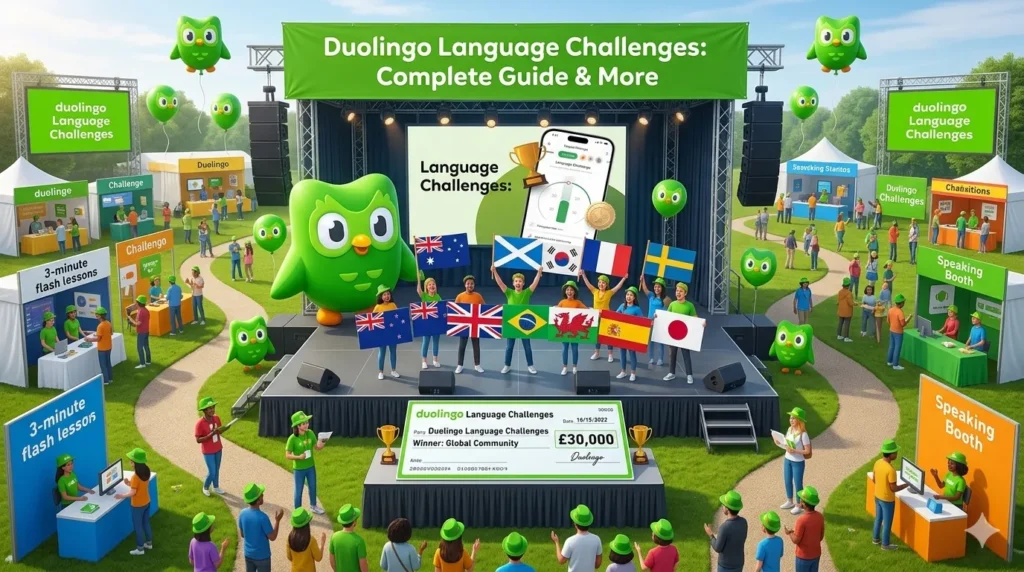
Discover proven, smarter strategies to crush challenges, skyrocket your leagues, and make learning fun again.
What Are Duolingo Challenges?
Duolingo challenges are gamified tasks in the app that push users to earn XP (experience points) through lessons, quests, and competitions.
They include daily quests, timed events, and leagues, designed to keep learners engaged amid busy US lifestyles like work commutes or family schedules. No tech jargon here—these are simple goals like “complete 3 perfect lessons” that reward badges and rank ups for steady progress.
Why Challenges Feel Hard
Confusion hits first: vague quest requirements shift with A/B tests, leaving users guessing. They’re time-consuming—timed challenges demand quick answers under pressure, while XP ramps up against global competitors in US-heavy leaderboards. XP competition intensifies in leagues, where top 10 advance weekly, dropping bottom ranks and crushing motivation during Sunday resets.
Types of Challenges
Duolingo offers distinct challenge types for varied engagement.
| Type | Description | XP Potential |
| Daily Quests | Randomized tasks like “5 perfect lessons” or “read 2 stories,” refreshing daily for badges. | 20-50 XP per quest |
| XP Challenges | Timed modes (Lightning Round, Match Madness, XP Ramp Up) with rapid questions from mastered skills. | 40+ XP in 2 minutes |
| League Challenges | Weekly leaderboards (Bronze to Diamond) based on total XP; compete against 30 others. | 100s weekly for top ranks |
| Monthly Challenges | Quest-based (e.g., 30-50 quests) or 1000 XP goals for exclusive badges. | Badge + motivation boost |
These keep US learners hooked, with leagues drawing millions weekly.
Complete Challenges Faster
Follow this step-by-step strategy tailored for busy Americans.
- Activate XP Boosts (from leagues or Super) before timed challenges for double points—top users stack them for 80 XP bursts.
- Turn off listening/speaking in XP Ramp Up for speed; focus on typing bubbles from weak skills first.
- Use peripheral vision in Match Madness: scan options fast, practice weak vocab daily to build speed.
- Hit unit tests (100+ XP) and stories aligned to your path for efficient clears.
- Time sessions post-reset (Sundays) to climb empty leagues easier.
These hacks cut completion time by 50%, per user reports.
Earn XP Quickly
Top Duolingo users in the US swear by these proven tricks.
- XP Ramp-Up: Random high-reward drills; complete flawlessly for 40+ XP in minutes.
- Lightning Round/Match Madness: 40 XP every 2 minutes with boosts; repeat from mastered units.
- Super Duolingo perks: Unlimited hearts, Legendary attempts, ad-free for non-stop farming ($6.99/month USA).
- Practice Hub: Target weak skills for combo XP; stories add 20-30 XP with path alignment.
- Streak bonuses: Maintain days for multipliers; wager gems for 7-day commitments (+14% retention).
League winners average 200 XP/hour this way.
Common Mistakes
- Over-practicing wrong lessons: Random jumps miss crown bonuses; stick to path for max XP.
- Ignoring easy methods: Skipping timed challenges or boosts wastes 2x potential; no peripheral training slows selection.
- Boost mismanagement: Using on single lessons vs. stacking for ramps; late league joins pit you against leaders.
- XP farming without learning: Repetitive easy content plateaus skills; balance with stories/podcasts.
Avoid these to double efficiency.
Improve Language Skills?
Yes, Duolingo challenges genuinely build skills when paired with strategy. A study of 48 US English speakers learning Spanish via Duolingo showed major gains in reading, writing, listening, speaking, vocab, and grammar after 27 hours—linked to quest completion and accuracy. Another on 245 learners hit Intermediate High proficiency post-A2 content, exceeding CEFR goals. For real fluency, combine challenges with stories and podcasts; leagues reinforce via repetition without burnout.
Stay Consistent
Avoid burnout by tying lessons to habits—like bedtime for 9:15 PM US routines or commute drills. Make it fun: Friend quests for shared goals, book trips for accountability, celebrate streaks with animations. Set 3-5 lessons/day; use streaks for dopamine hits (+14% retention via wagers). Track progress weekly to sustain motivation amid American hustle.
Quick Daily Plan
This 15-20 min system fits US schedules for XP, skills, and streaks.
- Min 5: Daily Quest – Knock out 1-2 for badge progress (20-50 XP).
- Min 7: XP Ramp/Timed – 2x boost Lightning Round (80 XP).
- Min 5: Path Lessons/Stories – 3 perfect units + 1 story (50 XP, skill review).
- Min 3: Practice Weak Skills – Hub drills (20 XP).
Total: 150+ XP, streak safe. Scale to 5 lessons if time allows.
FAQs
Is Duolingo good for learning a new language?
Yes, studies confirm gains in all skills after consistent use, especially for US beginners reaching A2+ levels.
What is a monthly challenge in Duolingo?
Quest-based goals like 30-50 daily/friend quests or 1000 XP for badges; varies by test group.
What are Duolingo Language challenges?
Broad term for daily quests, timed XP events, leagues, and monthly tasks to earn rewards via lessons.

I’m a website professional with 5 years of experience in building, managing, and growing online content platforms. As the creator of DuolingoGuides.us, I focus on providing helpful, easy-to-understand guides and resources for Duolingo users and language learners. My goal is to make information simple, accurate, and accessible for everyone.