Duolingo Max vs Super: Pricing, Features, and Which One Is
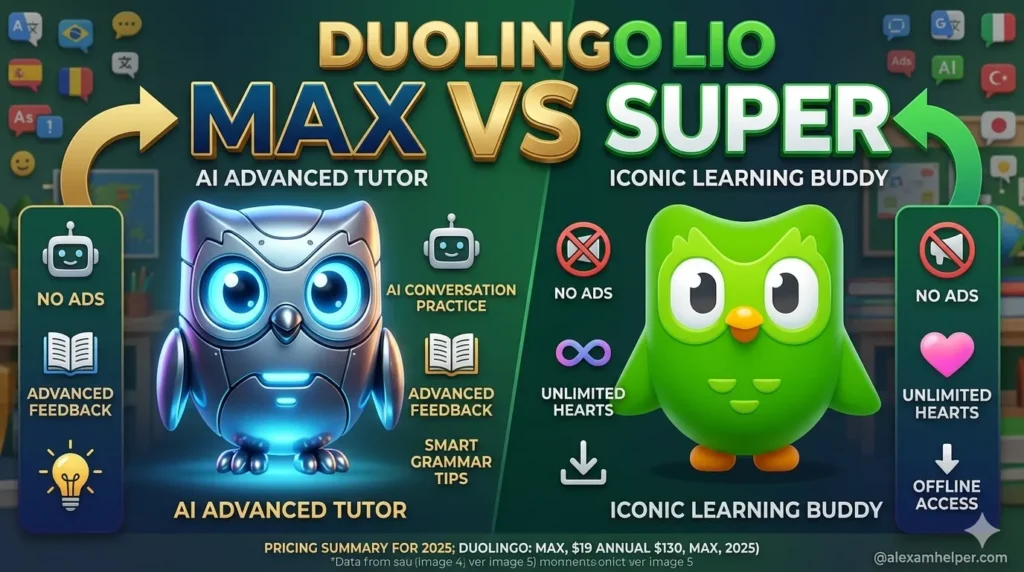
Duolingo Super and Duolingo Max often get confused because both remove ads and make lessons smoother, but they solve very different problems. The real question is not whether Duolingo has a premium plan, but whether the extra AI tools in Max are worth the jump in price.
Why users get confused
The confusion starts because the plans overlap on the basics: both improve the learning experience by reducing interruptions and frustration. Then Duolingo adds AI-powered features to Max, which makes some users assume it must be “better” in every case, even when that is not true.
The price gap also creates doubt. Super is positioned as the affordable premium tier, while Max is the expensive option built for deeper practice and more personalized support.
What users want
Most users are not shopping for features; they want better outcomes. They want to learn faster, avoid ads, practice more consistently, and feel more confident using the language in real conversations.
That matters because a subscription only feels worth it when it reduces friction or improves results. If the upgrade does not change daily learning behavior, it is easy to overpay for novelty.
What Super solves
Super Duolingo removes ads and unlimited heart limits, which makes practice feel smoother and less punishing. For many learners, that alone is enough to stay consistent and keep lessons moving without interruption.
This plan fits casual learners, budget-conscious learners, and anyone who mainly wants a cleaner Duolingo experience rather than AI coaching. In practical terms, Super solves the annoyance problem, not the speaking-practice problem.
What Max solves
Duolingo Max goes beyond convenience and tries to solve understanding and speaking practice. Its AI-powered explanations help users understand why an answer is wrong, while roleplay-style practice gives more interactive language use.
That makes Max more useful for learners who want feedback that feels closer to a tutor session. It is designed for people who need more than ad-free lessons and want guided practice that pushes them toward real-world use.
The value test
Max is often unnecessary if your main goal is simple, steady progress through lessons. Super already gives you the core premium experience, and for many users that is the best balance of cost and value.
Max starts to make sense when you actively use the AI tools, especially if you want explanation-heavy learning or conversation practice. If you do not use those features often, the higher price can feel wasteful rather than helpful.
Super vs Max
| Factor | Super | Max |
| Learning speed | Better than free because it removes friction | Can help more if you use AI explanations and roleplay often |
| Speaking confidence | Limited improvement | Stronger because of interactive practice |
| Cost efficiency | Strong value for most learners | Better only for users who need the AI layer |
| Daily usage impact | Makes lessons smoother and less annoying | Adds more engagement and guidance |
Who should choose what
Choose Super if you are a casual learner, a budget-focused learner, or someone who mostly wants ad-free, uninterrupted lessons. It is the safer choice for people who want premium comfort without paying for advanced AI features.
Choose Max if you are serious about speaking practice, want detailed explanations, or learn best through guided interaction. It is the better option when you actually plan to use the AI tools often enough to justify the higher cost.
Who should not upgrade
Low-usage learners usually do not need Max because the extra tools will not matter if they rarely open the app. Budget-sensitive learners should also be careful, since Super already covers the biggest pain points at a much lower price.
People who already use other AI tools for language practice may not get enough added value from Max to justify the expense. Beginners who quit quickly are also poor candidates for the premium tier because the subscription only pays off with consistent use.
Final verdict
If your goal is smoother daily learning, choose Super. If your goal is deeper explanations and more realistic speaking practice, consider Max.
The simplest rule is this: Super is the value pick, and Max is the power-user pick. For most learners, Super is enough; for a smaller group of committed users, Max can be worth the upgrade.
FAQs
Duolingo does have a premium plan, and Super is the more affordable premium tier while Max is the more advanced one. Max is essentially the higher-cost subscription that adds AI learning tools on top of the core premium benefits.
Can you reach C1 with Duolingo?
It can help build vocabulary and routine, but reaching advanced fluency usually requires more speaking, listening, and real-world practice than an app alone provides. That is why Max may help more than Super for practice, but neither plan guarantees high-level proficiency by itself.
Conclusion
Duolingo Super is the better choice for most people because it removes ads, smooths practice, and keeps costs reasonable. Duolingo Max is worth it only when you will regularly use the AI explanations and roleplay features enough to justify the higher price.

I’m a website professional with 5 years of experience in building, managing, and growing online content platforms. As the creator of DuolingoGuides.us, I focus on providing helpful, easy-to-understand guides and resources for Duolingo users and language learners. My goal is to make information simple, accurate, and accessible for everyone.