Duolingo Math Review (2026): Is It Worth It for Learning Math Fast?
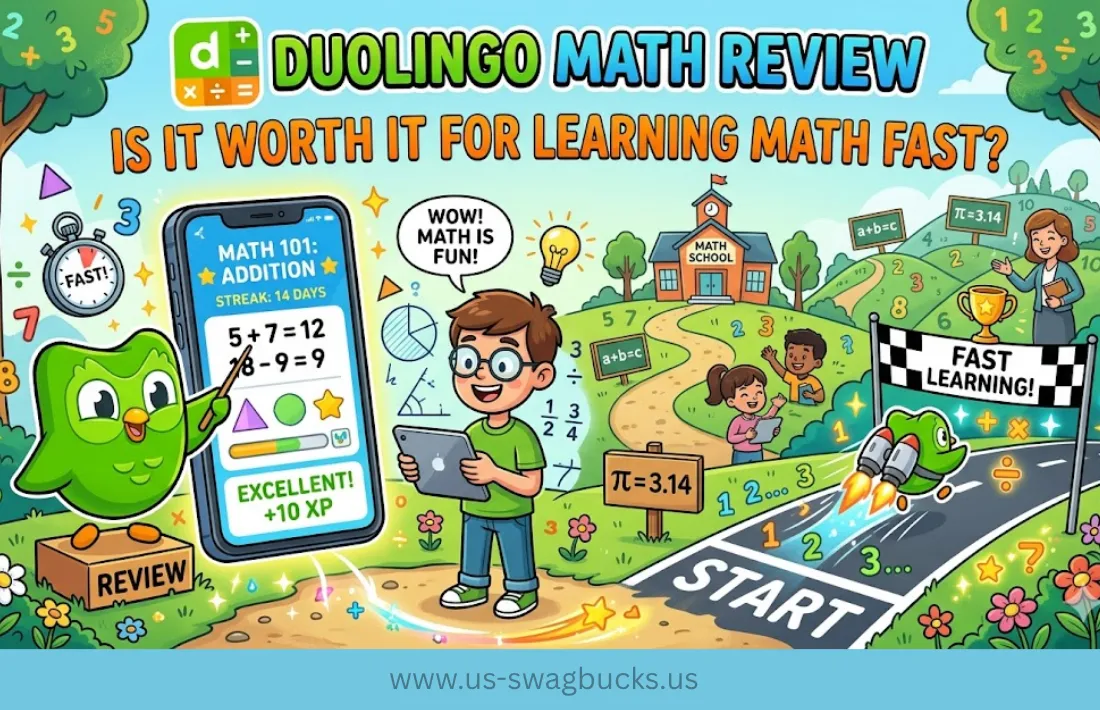
Duolingo Math is the gamified math app from the makers of the world’s most popular language‑learning platform, now targeting U.S. students, parents, and adults who struggle with arithmetic, fractions, and mental math.
In this 2026 review, we’ll break down whether it’s worth it for learning math fast, especially if you’re in the United States and want an English‑only, mobile‑first experience without heavy textbooks or expensive tutors.
Relatable Problem
In the U.S., math performance has been a growing concern:
- A 2024 Urban Institute study found that improving math scores leads to stronger long‑term earnings than reading gains, yet many students fall behind early.
- Traditional tutoring can cost $50–$100 per hour, making it unaffordable for many families.
This is where Duolingo Maths enters the picture: a free, app‑based, gamified tool that promises to help Americans of all ages learn math quickly and painlessly—but does it actually deliver results?
What Is Duolingo Math?
Duolingo math is a specialized math‑learning module inside the Duolingo app, built on the same streak‑based, XP‑driven system that made its language courses addictive.
It’s designed to reinforce basic and early‑intermediate math skills, not replace advanced classroom teaching.
Core Design
- Two main tracks:
- Elementary math for students (multiplication, division, fractions, place value, geometry basics, etc.).
- Brain Training for adults, focusing on mental math and practical calculations (unit conversions, percentages, everyday math).
- Gamified interface: right‑answer streaks, XP, levels, and the familiar Duo the owl mascot.
Language & Location
- The app is fully in English, with U.S.‑style math conventions (e.g., decimals, order of operations, Common Core‑aligned elementary topics).
- It’s optimized for smartphones and tablets, which most U.S. families already own.
Who Is It For?
Students (K–8)
- Grades K–5: great for multiplication tables, fractions, place value, and basic geometry.
- Middle‑schoolers: useful for review and practice, but not enough alone for advanced algebra or test‑prep.
Adults
- People who hate math but want to:
- Conquer everyday math (tips, taxes, discounts, unit conversions).
- Re‑build confidence before tackling higher‑level topics or college‑level courses.mathastro+1
Kids
- Best for kids already comfortable with phones/tablets and who enjoy games, rewards, and short sessions.
- Less ideal for very young kids who need heavy parental guidance or offline activities.
Also Check: Duolingo Lessons Disappearing
Why Most People Struggle With Math
Pain Points (U.S. Context)
1. Early Gaps in Understanding
- Many U.S. students miss core concepts in elementary maths (fractions, decimals, times tables), which cascade into later grades.
2. Math Anxiety and Fear of Failure
- Classroom pressure, timed tests, and “I’m just bad at math” attitudes create emotional blocks that kill motivation.
3. Lack of Daily Practice
- Unlike language immersion, most Americans don’t use math daily in a meaningful way, so skills fade quickly.
4. One‑Size‑Fits‑All Teaching
- Large classes and standardized curricula often don’t adapt to individual learning speeds, leaving strugglers behind.
- 5. Cost and Access to Help
- Tutoring and private classes are expensive, and free options (like libraries or Khan Academy) require extra effort and discipline to find and use.
How Duolingo Math Solves These Problems
Every major pain point above maps to a dedicated feature in duolingo math.
1. Fills Early Learning Gaps
- Short, topic‑specific lessons in elementary math (multiplication, fractions, place value, simple geometry) help rebuild weak foundations.
- Lessons are spiraled, so you revisit concepts with slightly harder numbers, reinforcing retention.
2. Reduces Math Anxiety
- The game‑like UI makes practice feel like a mini‑game, not a test.
- No harsh grading; mistakes give feedback, not judgment.
3. Encourages Daily Practice
- The Duolingo streak system (daily goals, XP, leagues) pushes consistent, short sessions—perfect for “just 5–10 minutes a day” habit building.
- This aligns well with U.S. families’ busy schedules and short attention spans.
4. Personal Pacing
- The app adapts to your speed, letting you repeat levels or slow down without embarrassment.
- It doesn’t replace a teacher, but it reinforces what’s taught in class.
5. Low‑Cost or Free Access
- Duolingo’s math is free with ads inside the main Duolingo app, dramatically lowering the barrier to entry for U.S. families.
- Paid upgrades (Super Duolingo) add extra benefits (like ad‑free, offline mode) at a fraction of tutoring costs.
Key Features
1. Gamification
- Streaks, XP, levels, and leagues keep learners coming back every day.
- Visual rewards (badges, progress bars) make math feel accomplishment‑driven, not punishment‑driven.
2. Bite‑Sized Lessons
- Each lesson is 5–10 minutes, perfect for phone‑based learning during commutes, breaks, or after dinner.
- Topics are chunked into clear units (e.g., “Multiplication,” “Fractions,” “Unit Conversion”), so you never feel overwhelmed.
3. Progress Tracking
- Visual dashboards show which topics you’ve mastered and where you’re lagging.
- You can see your XP, streak, and level across both elementary math and brain‑training modes.
Pros and Cons
Pros
Cons
| Limitation | Why It Hurts |
| Limited depth | Best for elementary and early‑intermediate math; not enough for SAT, AP, or college‑level algebra/calculus. |
| Not a full replacement | Works best as a supplement, not a stand‑alone curriculum. |
| Gamification focus over depth | Some critics say it can feel “too light” for serious learners. |
| Some in‑app ads (free) | Free users see ads and interruptions, which can break focus. |
Also Check: Duolingo Not Connecting
Duolingo Math vs Competitors
Here’s how Duolingo Math compares to top U.S.‑popular alternatives in 2026:
Verdict:
- For fast, fun, daily practice in the U.S., Duolingo Math wins on engagement and cost.
- For deep understanding or exam prep, Khan Academy or Brilliant are better primary tools.
Is It Really Effective?
Results and Data
- Duolingo’s language courses have shown measurable progress in real‑world assessments, building trust in its learning model.
- Early data on Duolingo Math suggests improvements in basic math fluency for elementary students and adults, especially when used consistently over 6–8 weeks.
User Feedback (Users)
- Parents report:
- Kids ask to “do Duolingo math” before bed, which is rare for math practice.
- Adult learners say:
- It helps re‑learn forgotten basics and build mental‑math speed for everyday tasks.
Limitations
- Does not guarantee dramatic test‑score jumps for SAT, ACT, or college exams.
- Best treated as a practice tool, not a complete curriculum.
Pricing (Free vs Paid)
Duolingo Math is free inside the main Duolingo app, but Super Duolingo (paid) removes ads and unlocks extra features.
Typical U.S. Pricing (2026)
| Plan | Monthly | Annual | Best For |
| Free | $0 | $0 | Casual learners, parents testing it out. |
| Super Duolingo (Monthly) | ~$12.99 | – | Daily learners who hate ads. |
| Super Duolingo (Annual) | – | ~$79.99–$83.99 (≈**$6–$7/month**) | Long‑term users wanting unlimited practice. |
| Super Family | – | ~$119.99/year | U.S. families with multiple kids. |
Is It Worth It in the USA?
For U.S. families, paying $6–$7/month for an ad‑free, daily math‑practice app is far cheaper than even one tutoring session.
If you’re only using it occasionally, the free version is often enough.
Best Way to Use It
Here’s a simple, 2026‑ready routine for Americans using Duolingo Math:
For Kids (Grades K–8)
- 5–10 minutes after school
- Complete 1–2 Duolingo Math lessons as a “math warm‑up”.
- Weekend “streak day”
- Combine Duolingo Math + Khan Academy for deeper practice.
- Weekly check‑in
- Review their progress dashboard and praise streaks and XP.
For Adults
- Daily “math snack”
- 5 minutes of brain‑training (unit conversion, percentages, mental math).
- Every 2 weeks
- Switch to elementary review to reinforce foundational skills.
- Track real‑world impact
- Notice how tips, discounts, and budgeting feel easier over time.
FAQs
Is Duolingo Math 100% free?
The core math content is free, but Super Duolingo removes ads and unlocks extra features.
Is it good for SAT/ACT prep?
No. It’s best for elementary and early‑intermediate math review. Use Khan Academy or Brilliant for serious SAT/ACT prep.
Can adults really learn math this way?
Yes, but mostly for re‑building basics and mental math. For advanced topics, combine it with video lessons or textbooks.
Is it safe for kids in the USA?
Duolingo is COPPA‑compliant in the U.S., with age‑appropriate content and no user‑to‑user chat in the main math flow.
Last Words:
Duolingo Math is a strong, low-cost option for building basic math skills through short, engaging daily practice. It works best for U.S. students (K–8) and adults who need to rebuild confidence or improve mental math.
However, it’s not a complete learning system—serious learners should pair it with deeper resources. Overall, it delivers real value for habit-building, but not for advanced mastery or test preparation.

I’m a website professional with 5 years of experience in building, managing, and growing online content platforms. As the creator of DuolingoGuides.us, I focus on providing helpful, easy-to-understand guides and resources for Duolingo users and language learners. My goal is to make information simple, accurate, and accessible for everyone.